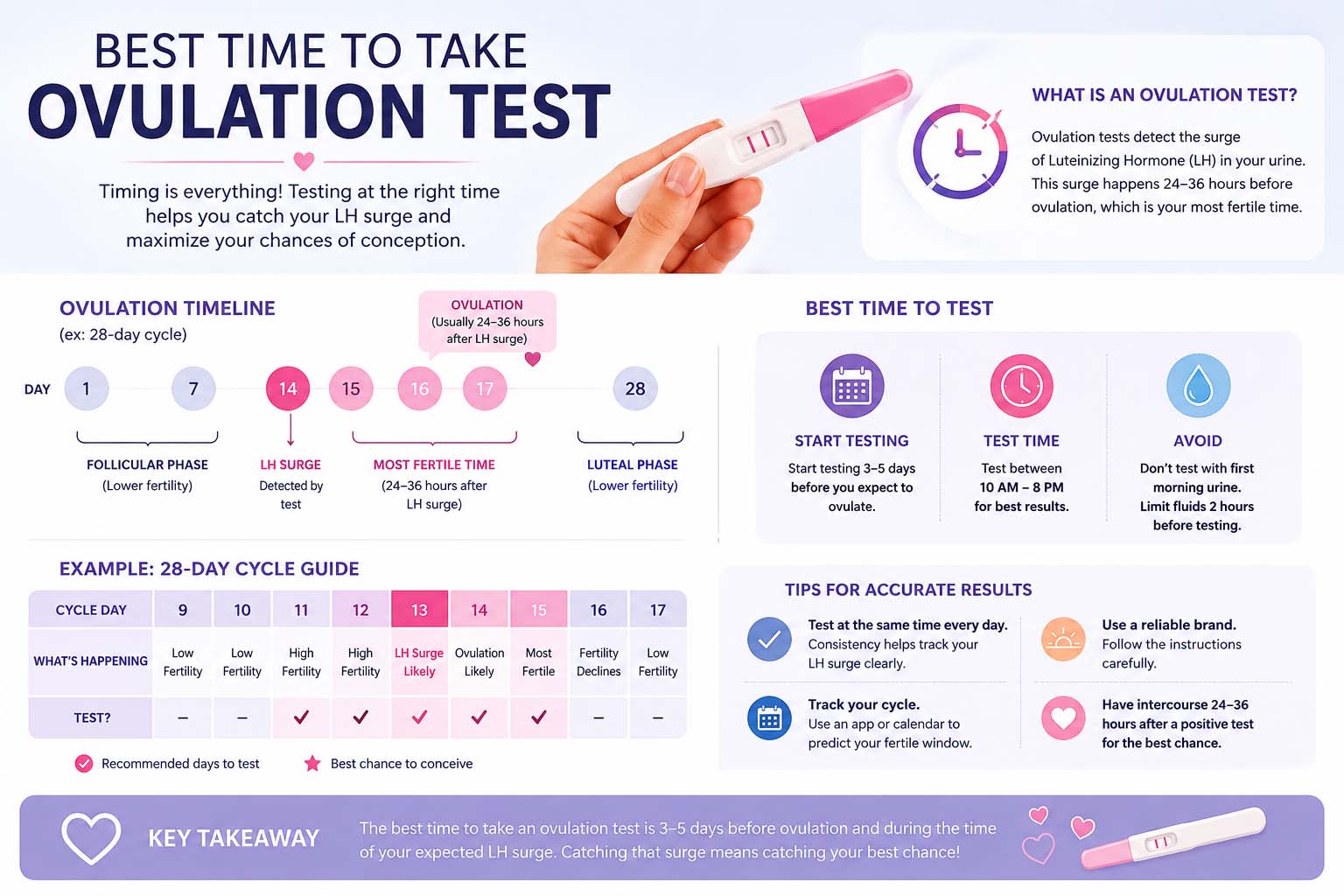
For individuals trying to conceive, understanding ovulation is one of the most important parts of fertility tracking. Ovulation tests can help identify the most fertile days of the menstrual cycle, making it easier to plan intercourse during the time when pregnancy is most likely to occur. One of the most common questions people ask is about the best time to take ovulation test kits for accurate results. Timing plays a major role because ovulation tests detect changes in hormone levels that occur shortly before ovulation.
What Is an Ovulation Test?
An ovulation test is a home fertility tool designed to detect a surge in luteinizing hormone (LH).
LH is a hormone that rises sharply before ovulation occurs.
When an ovulation test detects this surge, it usually indicates that ovulation may happen within the next 24 to 36 hours.
Ovulation tests are commonly used by people who want to:
- Identify fertile days
- Improve conception timing
- Track menstrual cycles
- Understand ovulation patterns
Overall, these tests are widely available and relatively simple to use.
Best Time to Take Ovulation Test
The best time to take ovulation test kits depends on both your menstrual cycle and the time of day.
Most fertility specialists recommend beginning testing several days before expected ovulation.
For many individuals with a 28-day cycle, ovulation often occurs around day 14.
Testing generally begins around:
- Day 10
- Day 11
- Day 12
Therefore, starting early helps avoid missing the LH surge.
Because every cycle is different, tracking your personal cycle length is important.
Similarly, understanding when is the best time to take a pregnancy test morning or night may be useful when pregnancy testing becomes relevant.
When Is the Best Time to Take Ovulation Test?
Many people ask when is the best time to take ovulation test during the day.
Unlike pregnancy tests, ovulation tests are usually not recommended first thing in the morning.
LH is often produced early in the day and may not appear in urine until later.
Many experts suggest testing:
- Late morning
- Early afternoon
- Mid-afternoon
Additionally, testing at approximately the same time each day is generally recommended.
Best Time of Day to Take Ovulation Test
Understanding the best time of day to take ovulation test kits can improve your chances of detecting the LH surge.
Many fertility specialists recommend testing between:
- 10 AM and 8 PM
Popular testing windows include:
- Noon
- 2 PM
- 4 PM
- Early evening
Why Morning Testing May Not Be Ideal
LH is typically synthesized earlier in the day.
Therefore, testing immediately after waking may occasionally miss rising hormone levels.
For this reason, many ovulation kit manufacturers recommend avoiding first-morning urine.
However, always follow the instructions provided with your specific test kit.
Best Time to Take an Ovulation Test During Your Cycle
The best time to take an ovulation test also depends on cycle length.
28-Day Cycle
Start testing around day 10 or 11.
30-Day Cycle
Start testing around day 12 or 13.
Shorter Cycles
Begin testing earlier.
Longer Cycles
Cycle tracking apps and fertility calendars can help estimate ovulation windows more accurately.
Additionally, information about when is the best time to test for hormone imbalance may help people who have concerns about hormone-related symptoms discuss testing with a healthcare professional.
How Ovulation Tests Work
Ovulation predictor kits work by measuring LH levels in urine.
The process is straightforward:
Step 1
Collect a urine sample or place the test directly into the urine stream.
Step 2
Wait for the recommended processing time.
Step 3
Read the result according to the instructions.
Step 4
A positive test generally suggests ovulation is approaching.
Therefore, this information helps identify peak fertility days.
Signs Ovulation May Be Approaching
Ovulation tests are useful, but many people also notice physical symptoms.
Cervical Mucus Changes
Mucus may become:
- Clear
- Slippery
- Stretchy
This consistency often resembles egg whites.
Mild Pelvic Discomfort
Some individuals experience mild ovulation pain.
Increased Libido
Hormonal changes may increase sexual desire around ovulation.
Breast Tenderness
Hormonal fluctuations can occasionally cause sensitivity.
Overall, tracking these symptoms alongside ovulation tests may improve fertility awareness.
Benefits of Ovulation Testing
Using ovulation tests offers several advantages.
Improved Fertility Timing
Identifying fertile days helps optimize conception efforts.
Better Cycle Awareness
Testing provides insights into hormonal patterns.
Non-Invasive Monitoring
Most ovulation tests are easy to perform at home.
Increased Confidence
Knowing when ovulation is likely occurring can reduce uncertainty.
For this reason, many individuals find ovulation testing helpful when planning pregnancy.
Likewise, expectant parents may later find information about the best time to get epidural during labor useful when preparing for childbirth.
Common Reasons for Inconsistent Results
Some people experience confusing or inconsistent ovulation test results.
Possible causes include:
Irregular Menstrual Cycles
Ovulation timing may vary significantly.
Testing at Different Times
Inconsistent timing can affect results.
Excessive Fluid Intake
Large amounts of fluids may dilute urine.
Hormonal Conditions
Certain medical conditions can influence hormone levels.
Improper Test Usage
Following manufacturer instructions carefully is important.
If concerns persist, consulting a healthcare professional may be helpful.
Tips for Accurate Ovulation Testing
The following practices may improve test accuracy.
Test Consistently
Use the test at roughly the same time each day.
Limit Excessive Fluids
Avoid drinking large amounts of water immediately before testing.
Track Your Cycle
Record cycle lengths and ovulation results.
Read Instructions Carefully
Different brands may have specific requirements.
Combine Methods
Tracking symptoms alongside testing may provide additional insights.
Overall, small adjustments can make fertility tracking more effective.
Wellness Tips for Fertility Support
While ovulation tests help identify fertile days, overall wellness also plays a role in reproductive health.
Maintain a Balanced Diet
Nutrient-rich foods support overall health.
Stay Physically Active
Moderate exercise supports wellness and hormone balance.
Additionally, knowing the best time to workout may help you establish a consistent activity schedule.
Manage Stress
High stress levels may affect reproductive health in some individuals.
Prioritize Sleep
Consistent sleep supports healthy hormone regulation.
Avoid Smoking
Smoking may negatively affect fertility.
Ultimately, healthy lifestyle habits support overall reproductive well-being.
Similarly, people experiencing pregnancy-related nausea may find information about when does morning sickness end useful later in their journey.
Things to Avoid When Using Ovulation Tests
Certain mistakes can reduce accuracy.
Testing Too Early
Starting too soon may waste tests.
Testing Too Late
Late testing may miss the LH surge.
Ignoring Instructions
Different brands have different guidelines.
Overanalyzing Single Results
Patterns over multiple days are often more useful.
Skipping Testing Days
Daily testing improves the likelihood of detecting ovulation.
In fact, consistency is one of the most important factors.
Frequently Asked Questions About the Best Time to Take Ovulation Test
What Time Should I Take Ovulation Test Kits?
Most experts recommend testing between late morning and early evening.
The best time depends on your cycle, but testing generally begins several days before expected ovulation.
What Is the Best Time of Day to Take Ovulation Test Kits?
Can I Take an Ovulation Test in the Morning?
Some manufacturers recommend avoiding first-morning urine because LH may not yet be detectable.
How Many Days Should I Test?
Continue testing daily until a positive LH surge is detected.
Does a Positive Ovulation Test Guarantee Ovulation?
A positive test suggests an LH surge is occurring, but it does not absolutely confirm ovulation.
Conclusion
Understanding the best time to take ovulation test kits can significantly improve fertility tracking efforts. Most experts recommend testing during late morning or afternoon hours rather than immediately after waking. Knowing when is the best time to take ovulation test kits, understanding the best time of day to take ovulation test measurements, and learning the best time to take an ovulation test during your cycle can help identify your most fertile days.